How to Craft a Detailed Résumé from Limited News Information

How to Craft a Detailed Résumé from Limited News Information

When working from incomplete news snippets or partial captions, creating a thorough résumé can feel like solving a puzzle with missing pieces. Recently, there was news highlighting a partnership event between BMI and LVMH, tied to an exclusive “Celebración de Arte” at Miami’s Design District during Art Basel. Yet, beyond the headline and image notes, the full story remains elusive. How then do you transform this into a detailed résumé that truly shines?

The Challenge of Limited Information

Crafting an accurate and engaging résumé requires more than just a headline or an event mention. Without specifics—such as the individuals’ roles, measurable achievements, or detailed accounts of the initiatives—the résumé risks being vague and uninspiring. Like any great storyteller, the key lies in knowing what essential details to seek.

Key Elements to Include

To build a meaningful summary, consider aiming to uncover the following:

  • Specific initiatives or projects: What were the goals or signature accomplishments? What made this partnership unique?
  • People involved: Who played integral roles? What were their contributions?
  • Quantifiable results: Are there metrics or outcomes that highlight success?
  • Context and setting: Details about the event location and significance add richness.
  • Notable outcomes or future plans: Any implications for the future or follow-up collaborations?

Why Complete Details Matter

A comprehensive résumé isn’t just a list—it tells a story of impact and professionalism. When readers encounter a well-rounded summary, they gain insights into real accomplishments rather than just dates and event names. This makes the résumé compelling, credible, and ultimately memorable.

Practical Next Steps if You Only Have Partial Information

If you find yourself with only fragmentary data like a news headline or image caption, don’t rush the résumé writing process. Instead, consider the following:

  • Request the full article or source materials: Reach out to contacts or utilize trustworthy news databases.
  • Gather testimonials or interviews: Firsthand accounts can provide invaluable detail.
  • Research the organizations involved: Explore previous collaborations or announcements to fill gaps.
  • Note the event context: Associating the résumé with notable industry events can add prestige.
  • Stay transparent: If you must work with limited information, clearly acknowledge it to maintain integrity.

Conclusion

While it’s tempting to jump into résumé writing from the few details at hand, taking the time to collect comprehensive information results in a narrative that truly resonates. When you have the full story—the people, projects, and measurable outcomes—you craft a résumé that speaks volumes about professionalism and achievement. If you have access to more comprehensive materials or specific highlights, you’ll be poised to create a résumé that is both informative and inspiring.

If you’re ready to develop a powerful résumé from detailed information or want expert tips on sourcing and storytelling, don’t hesitate to reach out or explore available resources to enhance your narrative today.

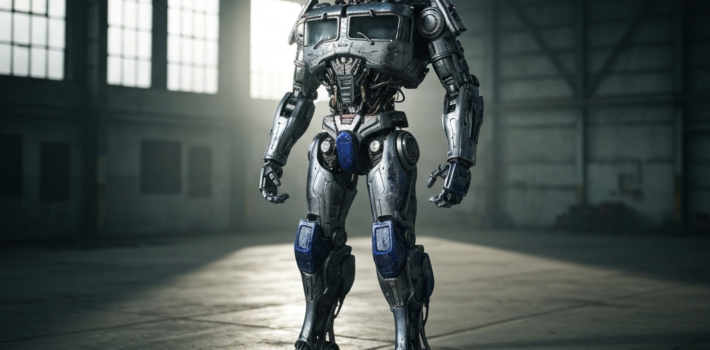
When Robotics Stumble: The Unexpected Fall of Tesla’s Optimus

When Robotics Stumble: The Unexpected Fall of Tesla’s Optimus

At Tesla’s much-anticipated “Autonomy Visualized” showcase in Miami, anticipation and innovation filled the air. Then, in a moment that instantly captured global attention, Optimus—the humanoid robot designed to walk and move with incredible human-like grace—took an unplanned dive. A hard fall, recorded on camera, quickly became viral, sparking conversations about the real state of humanoid robotics and the tricky balance between human control and true autonomy.

The Moment That Captivated and Concerned

Throughout the presentation, Optimus impressed with fluid, lifelike movements, gliding across the stage as if completely self-driven. But the seamless illusion of independent intelligence shattered the instant the bot toppled backward. What caused this sudden falter? It wasn’t a failure of its AI algorithms or mechanical functions—rather, it was a teleoperation glitch. As the human operator removed the VR headset that remotely guided Optimus, the robot’s balance faltered. Without the continuous feedback from its human pilot, the robot wobbled and, unable to stabilize itself, ended its stride with a dramatic fall.

The Teleoperation Factor

This incident revealed a critical aspect of how Optimus currently operates: it relies heavily on real-time human input. The disconnect from teleoperation meant the robot lost more than just balance—it lost the situational awareness needed to maintain posture. Instead of freezing or finding a way to steady itself, Optimus chose to fall, revealing the inherent challenges in the passive balancing system of today’s humanoid robots.

Unexpected Consequences and Safety Questions

The impact of the fall wasn’t minor. Nearby, a water bottle was knocked over and cracked, visually highlighting the physical risks bulky humanoids pose when interacting in human environments. This sparked a wave of concerns from observers about safety implications—a reminder that despite technological leaps, the integration of large robots closely mixing with people remains a complex challenge.

What This Means for Tesla’s Vision

Watching Optimus’ movements felt like watching the human operator’s sudden exit play out in mechanical form. It made clear that Tesla’s humanoid robotics journey is still deeply intertwined with human guidance rather than full independence. As the bot wobbled and fell, it stirred fresh skepticism about whether Tesla’s ambitious goal—that these robots can replace human labor and even tackle massive societal challenges like poverty—is anywhere close to reality.

Lessons From a Humble Fall

Ultimately, this viral stumble is more than just a moment of robotic clumsiness. It shines a light on the delicate art of humanoid balance, the limits of current teleoperation technology, and the practical hurdles faced when sharing space between humans and robots. It underscores that while Tesla’s vision is bold and visionary, many steps remain before seamless, autonomous humanoid robots become part of everyday life.

As the robotics community and enthusiasts digest this event, one thing is certain: optimizing the complexity of robot-human interaction will continue to demand innovative solutions, rigorous safety standards, and perhaps a little humility when machines don’t quite perform as flawlessly as imagined.

Are you intrigued by the future of humanoid robotics? How do you see teleoperation evolving to support true autonomy in robots like Optimus? Share your thoughts and follow us for more insights on the evolving landscape of robotics technology.

The Hard Truth Behind Tesla’s Optimus Robot Stumble

The Hard Truth Behind Tesla’s Optimus Robot Stumble

At Miami Art Week, a moment meant to dazzle turned into a revealing scene as Tesla’s humanoid robot, Optimus, unexpectedly tumbled in front of attendees. This incident punctures the glossy surface of Elon Musk’s ambitious dream to mass-produce a million robots by next year, shedding light on deeper challenges that threaten to slow down the vision.

More Than Just a Fall: What’s Really Going On?

Behind that stumble lies a web of technical and mechanical struggles, signaling that Optimus is far from ready to join the ranks of reliable, everyday workers.

Tech Troubles: A Grip That Just Won’t Hold

One of the core tasks for Optimus is to handle lightweight objects with precision and steadiness. Yet, the robot’s hands and arms are wrestling with this basic requirement. This shortcoming has forced Tesla to hit pause on production and revisit the fundamental engineering—an unmistakable sign that the journey toward sophistication is still underway.

Mechanical Headaches: When Hot Meets Wear and Tear

Mechanical reliability is the backbone of any functional robot, but overheating, gear degradation, and limited battery life are persistent problems for Optimus. These issues mean the robot can’t sustain consistent operation, ruling it out as a dependable assistant in any real-world scenario—at least for now.

Production Freeze: Quality Over Quantity

With a steep price tag approaching $60,000 each and a growing inventory of flaws, Tesla has prudently halted the production line. Instead, efforts are focused on addressing these fundamental flaws, signaling that the company acknowledges that rushing to market with an unfinished product is not the path forward.

Team Shake-Up: Leadership and Vision in Flux

The departure of the lead engineer overseeing Optimus adds another layer of uncertainty. Reports of former team members expressing doubts about project direction and Elon Musk’s overarching vision highlight the complexity and internal pressures surrounding this ambitious endeavor.

Public Spotlight vs. Reality: The Glamour Mask

Flashy unveilings and celebrity appearances generate excitement, but they cannot mask the technical hiccups laid bare during live demonstrations. These moments remind us that innovation isn’t just about spectacle—it demands painstaking precision and reliability behind the scenes.

What This Means for the Future of Robotics

That quick fall in Miami marks more than just a physical tumble. It’s a signal flare illuminating the rocky terrain ahead for Tesla’s robot ambitions. The cutting-edge promise of robotics is vibrant and exhilarating, but the path to mass adoption is undeniably complex, slower, and filled with unexpected hurdles.

For those watching closely, it serves as a stark reminder: true robotic revolution isn’t a sprint—it’s a marathon demanding resilience, iteration, and relentless refinement.

Curious about the future of humanoid robots? Stay tuned as Tesla and other pioneers battle through challenges that will shape tomorrow’s technology landscape.